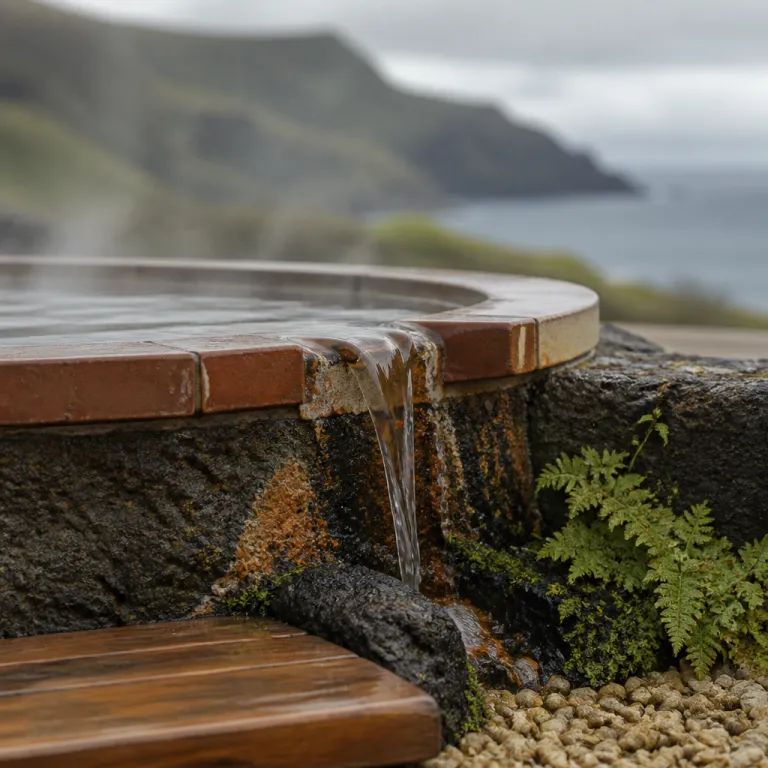
Azores hot tub hotel volcanic hot spring thermal escapes for serious soakers
On the Mid-Atlantic Ridge, a stay in an Azores hot tub hotel with volcanic hot spring pools means the water is heated by magma, not machinery. This Atlantic archipelago sits between continents, where geothermal springs rise through rock and feed pools that feel both wild and carefully curated. For hotel guests who care about temperature, minerals and the view from the water, the Azores landscape is one of Europe’s most rewarding thermal playgrounds.
The main island, São Miguel, concentrates many of the most refined thermal pools and hot springs, yet each island offers its own rhythm and character. São Miguel combines lush volcanic craters, ocean cliffs and steam vents, so every hot spring or thermal pool feels anchored in a very real geological story. When you book an Azores spa hotel with hot tubs and natural thermal water here, you are effectively reserving front row seats to the earth’s slow breathing.
Luxury and premium properties increasingly integrate natural thermal waters into their spa design, moving beyond standard hotel pools. Some hotels pipe geothermal water directly into private hot tubs on terraces, while others frame a single thermal pool as the quiet heart of the property. For travelers comparing an Azores hot spring retreat with Icelandic or mainland spa resorts, prices are often noticeably lower for similar or better water quality.
Access from the United States is straightforward, with regular nonstop flights from Boston and New York JFK to Ponta Delgada on São Miguel in under six hours. That short hop makes a long weekend of hot springs, thermal pools and wild Atlantic swimming surprisingly realistic for solo travelers and couples. With competitive round-trip fares on major and low-cost carriers, the Azores become one of the more cost-effective geothermal escapes in the North Atlantic.
Wellness-focused hotels in the Azores now compete on the character of their pools rather than the size of their gyms. Some emphasize indoor spa circuits with saunas and a single, perfectly heated thermal pool, while others lean into outdoor hot springs framed by hydrangeas and Japanese cedars. Across the islands, only a small cluster of hotels currently offer dedicated hot tubs, so choosing the right address matters if soaking is your main reason to travel.
| Hotel | Island / Location | Spring access | Private hot tubs | Typical price band* |
|---|---|---|---|---|
| Terra Nostra Garden Hotel | São Miguel, Furnas | Direct access to Terra Nostra thermal pool | No in-room tubs, extended pool hours for guests | Mid–upper |
| Octant Hotels Furnas | São Miguel, Furnas | Outdoor pools fed by local geothermal water | Outdoor spa tubs, no standard in-room jacuzzis | Mid–upper |
| Santa Bárbara Eco Beach Resort | São Miguel, north coast | Heated pools, no natural spring on-site | Selected suites with private hot tubs | Upper |
| Hotel Ponta Delgada | São Miguel, Ponta Delgada | Heated indoor pool, no direct spring | Shared indoor hot tub | Budget–mid |
*Price bands are indicative only and vary by season; check hotel websites for current rates and availability.
Furnas Valley and Terra Nostra: where hotel hot tubs meet a living caldeira
Furnas sits in a deep volcanic valley on São Miguel, where steam rises from the ground beside quiet village streets. This is where the Azorean relationship with geothermal water feels most intimate, because springs bubble beside gardens, cafés and churchyards rather than in remote wilderness. For hot tub travelers, staying in Furnas means stepping from a hotel spa into a landscape shaped by thermal waters for centuries.
At Terra Nostra Garden Hotel, the iconic Terra Nostra thermal pool glows a deep rust color from its iron-rich water. The main thermal pool holds steady around 37 to 40 degrees Celsius, so you can swim slow laps through mist while the surrounding Terra Nostra park wraps you in two hundred years of botanical history. Hotel guests enjoy extended access to this thermal pool outside regular day visitor hours, typically early morning and late evening, which transforms a famous attraction into something closer to a private garden.
Within Terra Nostra park, smaller thermal pools and channels create quieter corners for soaking between tree ferns and camellias. The combination of botanical canopy, volcanic steam and mineral-rich water makes this more than a simple spa pool, especially at night when the lighting softens and the valley falls quiet. If you are choosing an Azores hot tub base specifically for long, contemplative soaks, Terra Nostra remains the benchmark on São Miguel.
Nearby, Poça da Dona Beija offers a different style of thermal bathing, with a series of smaller stone-lined basins fed by a clear hot spring. These pools sit along a stream, with wooden walkways and subtle lighting that make evening visits particularly atmospheric. Because Poça da Dona Beija stays open late most days and uses timed entry slots with modest admission fees, you can move between hot pools under the stars, then return to your hotel hot tub for a final, slower soak.
The Furnas valley also hosts Caldeiras das Furnas, a geothermal field where fumaroles bubble beside simple cooking pits. Here, local restaurants lower pots into the hot ground to prepare cozido stews, using the same thermal energy that heats nearby springs and pools. Walking between Caldeiras das Furnas and the more manicured thermal pools of Terra Nostra or Poça da Dona Beija gives a clear sense of how everyday life and spa culture share the same volcanic source.
For travelers interested in contrast therapy and more structured bathing rituals, it is worth reading about urban bathing concepts such as the members-only club described in this daily contrast therapy bathing club article. While the Azores remain more low key and landscape driven, the same principles of alternating hot and cold, and of mindful time in water, apply in Furnas thermal pools. You can improvise your own routine by pairing a soak in Terra Nostra thermal waters with a cool plunge in a nearby stream or hotel pool.
Ponta da Ferraria and wild Atlantic soaks on São Miguel Island
On the western tip of São Miguel, Ponta da Ferraria offers one of Europe’s most unusual hot springs. Here, a volcanic hot spring emerges beneath the Atlantic, and the resulting thermal waters mix with ocean swells inside a natural rock pool. When the tide and swell align, you float in salt water that feels like a perfectly heated thermal pool, while waves break against black cliffs around you.
The Ferraria experience is tidal, so timing matters more than at many other hot springs in the Azores. At low tide, the hot water can feel almost too intense near the vents, while at high tide the Atlantic cools the pool into something closer to a warm swim. Local advice usually recommends arriving around mid-tide, when the balance between hot and cool water creates a comfortable, gently shifting thermal pool.
Above the natural pools at Ponta da Ferraria, a small spa complex channels the same thermal waters into man-made pools and a sheltered bathing area. This gives hotel guests and day visitors a more controlled environment, with railings, showers and a defined spa circuit that still feels connected to the wild Atlantic below. If you are planning an Azores itinerary focused on hot tubs and volcanic hot springs, pairing a stay in Furnas with an afternoon at Ferraria gives you both valley and ocean perspectives on geothermal water.
Safety at Ferraria depends on respecting the sea, because swells and currents can change quickly around the rocks. There is usually a rope to hold while you move through the hot springs area, and lifeguards monitor conditions during busier periods. When the ocean is calm, though, few thermal pools in Europe can match the sensation of watching the sun sink into the Atlantic while your body floats in naturally heated water.
For solo travelers who value quiet, early morning or shoulder-season visits to Ponta da Ferraria are ideal. The Azorean climate keeps air temperatures mild, so even on cooler days the contrast between fresh wind and hot spring water feels invigorating rather than harsh. After a long soak, returning to a hotel hot tub or indoor spa pool on São Miguel extends the warmth well into the evening.
If you want to understand how different hotels interpret private soaking, it helps to compare Ferraria’s wild setting with curated in-room experiences such as those highlighted in this guide to luxury resorts offering in room jacuzzi style suites. The Azores approach tends to favor fewer rooms with better views, and hot tubs that frame the landscape rather than dominate the terrace. That balance between design and geology is what sets a serious Azores hot tub and volcanic spa stay apart from a generic weekend at a city hotel.
How Azores hot tub hotels use geothermal springs, pools and spa design
Across the Azores, only a handful of properties have direct access to natural hot springs or thermal waters, so the best hotels treat them as a central design element. Octant Hotels Furnas, for example, uses outdoor pools and hot tubs fed by local springs, then layers a contemporary spa around that core. Hotel Ponta Delgada, by contrast, focuses on an indoor pool and hot tub experience, appealing to travelers who want reliable warmth regardless of Atlantic weather.
Santa Bárbara Eco Beach Resort on São Miguel offers another angle, with select suites featuring private hot tubs overlooking the ocean rather than thermal pools. While these hot tubs use heated fresh water rather than geothermal spring water, the combination of Atlantic views and quiet terraces still appeals to hot tub-focused travelers. For many guests, the choice is between direct access to thermal waters in Furnas and the privacy of a hot tub with a wide horizon on the north coast.
Many travelers ask, “Are the hot tubs in Azores hotels natural?” and the honest answer is clear: many utilize natural geothermal springs, especially in Furnas and other volcanic valleys. That distinction matters when you are comparing an Azorean spa hotel with a standard resort that relies on boilers and chemicals. In the islands, the most interesting properties integrate natural springs, thermal pools and even small caldeiras into their architecture, so the spa feels anchored in the landscape rather than imported.
Wellness facilities often combine a main pool, one or two hot tubs and a series of smaller thermal pools or jets. A good spa on São Miguel will also offer a cold plunge or at least a cool water shower, allowing you to create your own contrast therapy circuit between hot and cold. This approach echoes more structured urban bathing concepts, but in the Azores the focus remains on simple, repeated immersion in clean, mineral-rich water.
From a sustainability perspective, using geothermal energy to heat pools and spa facilities reduces reliance on fossil fuels. Many properties work with local partners and energy providers to ensure that thermal waters are used responsibly, with careful monitoring of flow rates and temperatures. For travelers who care about environmental impact, this makes an Azores hot spring and hot tub holiday a more responsible choice than many energy-intensive spa complexes elsewhere.
When you compare options, look beyond the generic “spa” label and ask specific questions about pools, springs and water sources. Does the hotel have direct access to a natural hot spring, or does it simply heat a standard pool to thermal temperatures? For more inspiration on how refined private soaking can feel, browse this selection of refined hotel suites with private hot tubs, then apply the same critical eye when choosing your Azores base.
Planning your soak focused itinerary on São Miguel and beyond
Building an itinerary around hot springs and thermal pools in the Azores usually starts with São Miguel, then expands to quieter islands if time allows. Most travelers begin in Ponta Delgada, where Hotel Ponta Delgada offers a convenient indoor pool and hot tub for a first, jet lag-friendly soak. From there, a rental car opens up Furnas, Caldeira Velha, Ponta da Ferraria and several smaller thermal spots within easy driving distance.
Caldeira Velha, on the northern flank of the island, combines a warm waterfall, small thermal pools and dense forest, creating a more intimate alternative to larger spa complexes. The thermal waters here are slightly cooler than in Furnas, which makes them comfortable for longer soaks, especially on warmer days. Because access is controlled and numbers are limited through timed tickets and capped daily entries, the experience feels calm and curated rather than crowded, particularly outside peak midday hours.
In Furnas, plan at least one full day to move between Terra Nostra, Poça da Dona Beija and the Caldeiras das Furnas geothermal field. Start with a morning swim in the Terra Nostra thermal pool while day visitors are still arriving, then shift to the smaller thermal pools of Poça da Dona Beija after dark. Between soaks, walk through Parque Terra Nostra and the surrounding village streets, where steam vents and small termas-style bathhouses hint at older bathing traditions.
For solo travelers, one of the main tips for visiting the Azores is to embrace shoulder season, when the region avoids the peak Mediterranean-style crowds. From late spring to early autumn, air temperatures are warm enough for evening soaks, yet the pools rarely feel packed, especially on weekdays. With average hotel rates still below many comparable geothermal destinations, you can allocate more of your budget to longer stays and multiple spa sessions.
Transport between islands is straightforward via short flights or ferries, but for a first hot spring-focused trip, concentrating on São Miguel keeps logistics simple. If you do extend to other islands, look for smaller termas and natural pools rather than large spa complexes, as geothermal activity is more scattered. Always check local guidance on water quality and safety, especially in wild pools where currents or sudden temperature changes can occur.
When planning, remember that some thermal sites require advance booking or timed entry, particularly Caldeira Velha and Poça da Dona Beija during busy periods. Many hotels can secure slots or advise on quieter times, so use concierge teams as part of your soaking strategy. A well-planned route might include a morning at Caldeira Velha, an afternoon at Ponta da Ferraria and an evening in Furnas, with your hotel hot tub as the constant thread between these different waters.
Practical tips for hot spring etiquette, safety and comfort
Thermal waters in the Azores are generally safe and well maintained, but a few habits will make your experience more comfortable. Rinse before entering any pool or hot spring, both for hygiene and to help your body adjust gradually to the temperature. Limit each continuous soak to around twenty minutes in the hottest pools, especially in enclosed spa areas where steam can build.
Mineral-rich water, particularly the iron-heavy thermal pool at Terra Nostra, can stain light-colored swimwear, so bring darker pieces you reserve for hot springs. After soaking, rinse thoroughly to remove mineral deposits from your skin and hair, then moisturize, as thermal waters can be slightly drying over repeated sessions. If you plan multiple days of soaking, alternate longer hot spring sessions with shorter dips in cooler pools or the ocean to avoid fatigue.
Respect for local etiquette keeps the atmosphere calm, especially in smaller thermal pools and termas-style bathhouses. Keep voices low, avoid phone calls in spa areas and follow any posted guidance on photography, which is often restricted in more intimate pools. In wild settings like Ponta da Ferraria, give other bathers space around the hottest vents, where the combination of waves and hot water requires more focus.
Hydration matters more than many travelers expect, because hot springs and thermal pools can be deceptively tiring. Drink water before and after each soak, and avoid excessive alcohol if you plan long sessions in hot pools or saunas. Many spas in the Azores provide free drinking water near thermal pools, but carrying your own reusable bottle ensures you never have to cut a soak short to find a bar.
For those new to geothermal bathing, start with milder thermal pools such as Caldeira Velha or the cooler edges of Poça da Dona Beija. Once you understand how your body responds, you can move closer to hotter inlets or spend longer in the main Terra Nostra thermal pool. If you feel lightheaded or overly flushed, step out, cool down in fresh air or a cold shower, then return only when you feel fully comfortable.
Local operators and hotel staff are used to guiding first-time visitors through the nuances of each spring, pool and spa. Do not hesitate to ask about ideal times, water temperatures or the best sequence of pools for a balanced experience. Their practical tips for specific sites often make the difference between a simple soak and a genuinely restorative Azores hot tub and hot spring retreat.
Choosing the right hot tub hotel in the Azores for your travel style
With only a limited number of hotels in the Azores offering dedicated hot tubs, selection is more about fit than sheer volume. Start by deciding whether you want direct access to natural thermal waters, or whether a well-designed hot tub with a strong view will satisfy your soaking ambitions. If geothermal immersion is non-negotiable, focus on Furnas and São Miguel properties that integrate springs and thermal pools into their core identity.
Octant Hotels Furnas suits travelers who want a contemporary design hotel wrapped around serious spa facilities and outdoor thermal pools. Terra Nostra Garden Hotel appeals to those who prioritize the character of a single, iconic thermal pool and the surrounding Terra Nostra park. Santa Bárbara Eco Beach Resort, with its private hot tubs in select rooms, works best for guests who value privacy, Atlantic views and easy access to wild beaches over direct thermal spring access.
Hotel Ponta Delgada offers a more urban base, with an indoor pool and hot tub that provide reliable warmth before or after day trips to springs and pools around São Miguel. For many travelers, this combination of city convenience and easy access to rural thermal waters strikes a practical balance. When comparing rates, remember that Azorean hot tub and hot spring stays often cost significantly less than equivalent spa hotels in Iceland or mainland Europe.
Solo travelers should pay attention to how each property handles spa access for individual guests, including any time slots or quiet hours. Some hotels reserve certain periods for adults only, which can be ideal if you want to soak in silence after a day of hiking or driving. Others offer free access to nearby termas or discounted entry to partner thermal pools, effectively extending the spa beyond the hotel walls.
When reading reviews, look for comments about water temperature consistency, crowding in pools and the quality of maintenance rather than generic praise for “nice spas.” A well-run Azores hot tub and thermal pool property will keep waters clean, manage bather numbers and communicate clearly about any seasonal changes in flow. If a hotel seems vague about its springs or pools, consider whether it truly prioritizes the soaking experience.
For travelers who plan to build future trips around hot tubs and thermal waters, the Azores offer a compelling benchmark. The combination of natural springs, carefully designed pools and relatively modest prices sets a high standard for value and authenticity. Once you have calibrated your expectations here, it becomes easier to judge whether other hot tub hotels worldwide are offering genuine geothermal character or just another fibreglass tub on a deck.
Key figures for Azores hot tub and thermal spring travel
- The Azores receive a fraction of the visitor numbers seen in major Mediterranean destinations, which helps keep most hot springs and thermal pools pleasantly uncrowded.
- Only a small number of hotels across the islands currently offer dedicated hot tubs, so booking early is essential if a soak-focused stay is your priority.
- Round-trip flights from Boston or New York JFK to São Miguel are typically shorter and often cheaper than journeys to many other geothermal regions, making the Azores accessible for North American travelers.
- Prices for quality hot tub and thermal pool hotels in the Azores are generally lower than comparable geothermal stays in Iceland, offering strong value for soak-focused itineraries.
- Thermal pools such as the main Terra Nostra pool usually maintain water temperatures around 37 to 40 degrees Celsius, which is ideal for extended soaking without excessive strain on the body.
Frequently asked questions about Azores hot tub hotels and thermal springs
Are the hot tubs in Azores hotels natural or artificially heated ?
Many hot tubs and thermal pools in the Azores use natural geothermal springs, especially in Furnas and at dedicated termas-style facilities. Some hotel hot tubs, particularly those on private terraces, use standard heated fresh water rather than direct spring water. When booking, ask whether the property uses geothermal waters or conventional heating if this distinction matters to your experience.
Is it safe to use geothermal hot tubs and thermal pools in the Azores ?
Geothermal hot tubs and thermal pools in the Azores are generally safe, as temperatures and water quality are monitored by operators and local authorities. Facilities such as Terra Nostra, Poça da Dona Beija, Caldeira Velha and the spa at Ponta da Ferraria follow established safety protocols. As with any hot spring, limit soak times, stay hydrated and follow posted guidance, especially in wild pools exposed to ocean swells.
Do all hotels in the Azores have hot tubs or thermal pools ?
Only a small proportion of hotels in the Azores offer hot tubs or direct access to thermal pools. Many other properties provide standard pools or partner with nearby termas and hot springs for guest access. If soaking is central to your trip, prioritize hotels in Furnas or on São Miguel that clearly highlight their thermal waters and spa facilities.
When is the best time of year to visit the Azores for hot springs ?
The Azores have a mild, maritime climate year round, so hot springs and thermal pools remain appealing in every season. Shoulder months often provide the best balance of comfortable air temperatures, lower visitor numbers and good flight deals. Evening soaks are particularly atmospheric outside the warmest weeks, when cooler air enhances the contrast with hot spring water.
How should I prepare and what should I pack for thermal pools in the Azores ?
Pack at least one dark-colored swimsuit for iron-rich pools like Terra Nostra, plus a lighter option for standard pools and hotel spas. Bring quick-drying towels, waterproof sandals and a reusable water bottle to stay hydrated between soaks. A light robe or cover up is useful for moving between pools and hotel rooms, especially on breezy evenings around São Miguel.