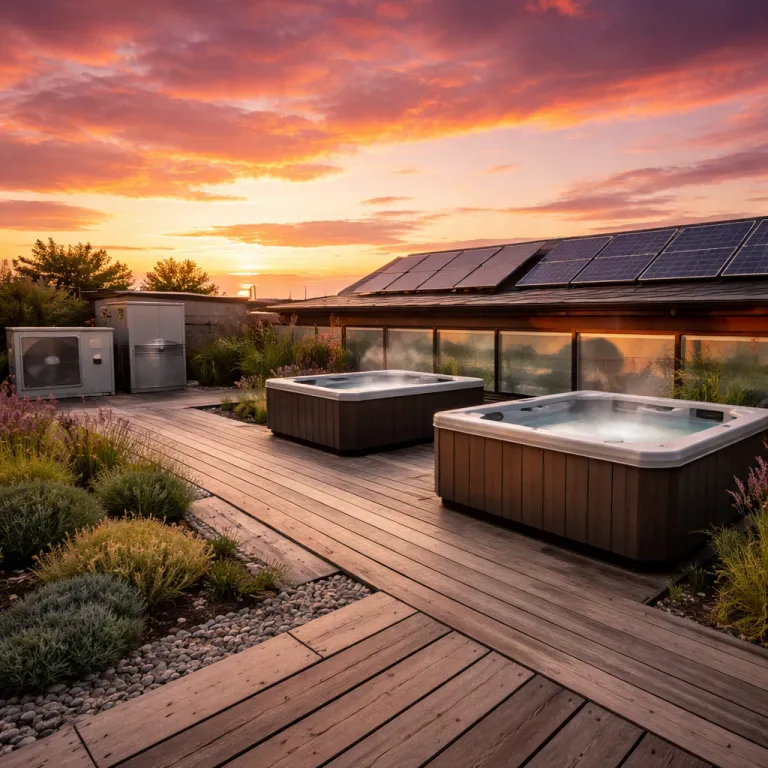
When the best seat in the hotel is also the greenest
The most coveted spot in a luxury hotel is often not the corner suite but the hot tub with the cleanest sightline and the quietest motor. In high end spa hotels, sustainable hot tub hotel energy efficiency is fast becoming the invisible standard that separates a genuinely refined spa area from a noisy, energy hungry deck ornament that undermines the property’s eco narrative. For business leisure travellers extending a trip, the promise is simple yet demanding, a wellness experience that feels indulgent in the moment but responsible over the long term.
To understand what makes a hot tub sustainable, you need to look beneath the water line and into the engineering. Modern spa solutions use deep insulation around the tub shell, high efficiency covers, and variable speed pumps that modulate energy consumption instead of running at one blunt setting all night. As one manufacturer puts it without embellishment, “They use advanced insulation and efficient heating systems,” a plain description that captures how far energy efficient spa technology has moved beyond basic residential tubs.
That single sentence captures why energy efficient hot tubs are no longer a niche eco project but a core part of serious hotel energy strategy. In many properties, the spa area is one of the largest continuous draws on energy, especially where indoor outdoor hot tubs, saunas, and swim spas run for hotel guests from early morning until after midnight. When a hotel management team finally audits this energy consumption, the numbers often shock them more than any minibar report, revealing that the wellness zone can rival kitchens and laundry in year round demand.
Independent testing by manufacturers and third party labs shows that sustainable hot tubs can cut energy use by up to 80 percent compared with older, poorly insulated models, largely through better insulation, smarter controls, and heat recovery from pumps. Industry data from Beachcomber Hot Tubs, based on controlled comparison tests between legacy and modern units carried out in 2022, indicates that energy savings of around one third are realistic for many hotels simply by moving to energy efficient systems, while separate analysis of air source heat pump performance for spas, summarised by Homebuilding & Renovating magazine in a 2021 review of hot tub heating options, reports that “heat pumps are effective for heating hot tubs” and “they can reduce energy costs by 40–60%.” For a spa hotel running multiple tubs and saunas, that level of energy saving reshapes the environmental footprint and the operating budget in a single move.
Yet most hotels still treat the hot tub as a static amenity rather than a live energy project. Guests see the water, the view, and the wellness promise, but rarely the energy efficiency or the eco friendly engineering that sits behind the experience. The result is a strange disconnect, where a property can talk about sustainable design in its lobby while its outdoor tubs quietly burn through energy all night under thin covers and outdated controls, eroding both the sustainability story and long term profitability.
Inside a sustainable hot tub: insulation, water care, and quiet power
For travellers who care about sustainable hot tub hotel energy efficiency, the technical details are not abstract, they shape the feel of every soak. A truly sustainable hot tub starts with the shell and cabinet, where dense insulation wraps the tub and pipework to keep hot water at temperature with minimal energy input. When you slide into one of these high quality tubs, the silence of the pumps and the steady heat are the first signals that this is a carefully engineered spa experience rather than a basic backyard tub repurposed for hotels.
Heating is the next frontier, and this is where energy efficient systems now justify their place on any serious property’s capital projects list. Many leading spa hotels are pairing well insulated tubs with heat pumps or solar compatible boilers, creating spa solutions that use ambient air or renewable sources to maintain hot tubs and swim spas at stable temperatures. In practice, that means lower energy consumption, less strain on the grid, and a more consistent guest experience, especially in colder climates where outdoor tubs once meant constant reheating and uncomfortable temperature swings.
Water treatment is often overlooked, yet it is central to both wellness and sustainability. Advanced filtration and low chemical systems reduce water waste by extending the time between full drain downs, which in turn lowers the energy required to reheat thousands of litres of hot water after every change. For hotel guests, the benefit is tangible, clearer water, softer on the skin, and a spa area that smells of fresh air rather than harsh disinfectant, reinforcing the sense that luxury and environmental care can coexist.
Material lifecycle is the quiet test of whether a hotel’s eco claims extend beyond the brochure. Sustainable hot tubs now use recyclable shells, responsibly sourced timber cladding, and long term components that can be serviced rather than discarded, all of which reduce the environmental footprint of the spa over its lifetime. When you see a property talk openly about where its tubs, saunas, and spas come from, how they are maintained, and how they will eventually be recycled, you are looking at a hotel that treats wellness as part of a broader eco system rather than a separate marketing line.
Smart controls tie all these elements together into one coherent energy efficiency strategy. From a central dashboard, maintenance staff can monitor each hot tub, sauna, and swim spa, adjusting temperatures, filtration cycles, and lighting to match real guest usage rather than outdated assumptions. This is where the integration of smart technology for energy management, from thermostats to occupancy sensors, turns a static spa into a responsive, low energy asset that supports both guest satisfaction and the bottom line.
The economics hotels are missing: why the upgrade pays for itself
When hotel management teams finally run the numbers on sustainable hot tub hotel energy efficiency, the business case usually lands somewhere between compelling and irrefutable. Energy is one of the fastest rising operating costs in global hotels, and the spa area often behaves like a permanent, unmetered tenant drawing power and heat around the clock. Replacing legacy tubs with energy efficient models, adding proper insulation, and installing smart controls can cut that energy consumption dramatically while also elevating the guest experience.
Real world data shows that energy efficient hot tubs can deliver energy savings of around 33 percent in typical conditions, even before more ambitious heat pump projects are considered. When a property layers in high efficiency pumps, better covers, and optimised filtration cycles, the combined effect can push savings far higher, especially in colder regions where outdoor tubs once bled heat into the night air. For a spa hotel running multiple hot tubs, saunas, and swim spas, those savings translate into six figure reductions in annual energy costs over the long term.
One European lakeside resort, for example, replaced six older hot tubs with modern, fully insulated units linked to air source heat pumps and centralised controls. According to the hotel’s internal energy audit, carried out in 2023 and reviewed with an external engineering consultant, electricity use for the spa’s wet areas fell by just over 45 percent in the first year, cutting annual utility spend by approximately €68,000. The figures assume an average electricity price of €0.28 per kWh, baseline consumption of around 540,000 kWh per year for the previous installation, and a total project cost of roughly €250,000, which together delivered a payback period of under four years on the total investment. As the facilities manager summarised it, “Guests notice the quieter tubs and stable temperatures, but what they do not see is that we have halved the energy behind their soak without asking them to compromise on comfort.”
Yet the industry’s adoption curve remains surprisingly flat, and the reasons are as human as they are financial. Capital expenditure on spa solutions competes with visible projects like lobby redesigns or new restaurants, while the energy efficiency of a hot tub is rarely a headline in marketing campaigns. Many hotel management teams still underestimate how much guests value eco friendly choices when those choices are woven seamlessly into a high quality wellness experience rather than presented as a compromise.
Guest behaviour is shifting, especially among business leisure travellers who extend work trips into short wellness breaks. These guests are willing to pay a premium for a property that can demonstrate reduced environmental footprint without sacrificing comfort, from low carbon energy solutions to sustainable hot tubs with exceptional views. When a hotel aligns its pricing, its sustainability commitments, and its spa design, guest satisfaction rises not only because the water feels good but because the story behind the soak feels credible.
For travellers comparing options on a platform like hot-tub-stay.com, the difference between hotels that treat hot tubs as energy projects and those that do not is becoming easier to read. Look for language about energy saving systems, smart controls, and sustainable materials rather than vague references to a generic spa. When a property is transparent about its energy efficiency upgrades and its collaboration with maintenance contractors, hot tub manufacturers, and energy consultants, you are seeing a hotel that understands wellness as both an experience and an operational discipline.
How to book smarter: reading between the bubbles on sustainability claims
For travellers who care about sustainable hot tub hotel energy efficiency, the booking process is no longer just about whether a property has a tub on the terrace. The real question is whether that hot tub, and the wider spa area around it, has been designed as part of a coherent eco strategy that respects both energy and water. You can read this in the details, from the way a hotel describes its spa hotel facilities to the specificity of its sustainability commitments.
Start with the basics, and ask directly about energy efficient amenities when you contact a hotel or your preferred booking service. Properties that have invested in sustainable hot tubs, eco friendly water treatment, and energy saving controls are usually proud to explain the systems, from insulation to smart thermostats, rather than hiding behind generic wellness language. When a hotel can tell you how it manages energy consumption in its hot tubs, saunas, and swim spas, you are hearing from a team that treats the spa as a living project rather than a static asset.
Certifications and reporting frameworks are useful, but they are only part of the picture. Look for hotels that extend their sustainability narrative into the wet areas, mentioning hot tubs, spas, and the spa area explicitly rather than focusing solely on rooms and restaurants. A property that talks about indoor outdoor wellness spaces, regenerative landscaping around the tubs, and long term maintenance partnerships is signalling that its environmental footprint is being managed across the full guest experience.
On specialist platforms, you can go further and compare how different solutions hotels adopt shape the feel of a stay. Some properties now highlight energy efficient hot tubs with panoramic views, pairing them with quiet saunas and carefully zoned spa areas to create a layered wellness experience that respects both privacy and energy efficiency. When you see a listing that speaks about high quality materials, energy saving systems, and thoughtful design rather than just ticking the “hot tub” box, you are looking at a hotel that understands what modern luxury travellers actually value.
If you want a concrete starting point, explore curated collections of elegant hotels with hot tubs in the room, where the focus is as much on the view from the water as on the engineering beneath it. On these pages, you will often find properties that treat the hot tub as a centrepiece of the room’s design, integrating insulation, smart controls, and eco friendly materials into a seamless guest experience. For business leisure travellers, this is where the line between work and wellness blurs most pleasantly, a quiet soak after meetings that feels indulgent yet aligned with your own environmental values.
Key figures on sustainable hot tub hotel energy efficiency
- Energy efficient hot tubs can reduce energy use by around 33 percent compared with older models, according to testing by Beachcomber Hot Tubs in 2022, which significantly lowers operating costs for hotels with multiple units.
- Heat pump systems used for hot tub heating can cut energy costs by 40 to 60 percent, based on analysis reported by Homebuilding & Renovating in a 2021 feature on air source heat pumps for spas, making them one of the most effective upgrades for spa hotels in cooler climates.
- Industry case studies and lab simulations published between 2020 and 2023 show that modern sustainable hot tubs, when combined with improved insulation and smart controls, can reduce overall energy consumption by up to 80 percent compared with traditional installations, especially in properties with large spa areas.
- Hotels that integrate smart thermostats, high efficiency pumps, and well insulated covers into their spa solutions often see payback periods of only a few years, after which the energy savings contribute directly to profit and reduced environmental footprint.
- Guest surveys in upscale properties conducted since 2019 indicate that a clear sustainability narrative around wellness facilities can increase guest satisfaction scores, particularly among business leisure travellers who prioritise eco friendly choices without compromising comfort.